The image most people carry of iron body training is a shaven-headed monk absorbing a sledgehammer blow to the stomach on a grainy video, or a demonstration at a martial arts expo where someone snaps a rebar against their forearm without flinching. These things are real, and they are genuinely impressive. But they represent the end of a process that most coverage never bothers to explain — a process that is methodical, physiologically coherent and far more interesting than the spectacle suggests. Iron body training is not a party trick. It is one of the most sophisticated conditioning traditions the martial arts world has produced, and understanding it properly starts with setting aside everything the YouTube clips imply.
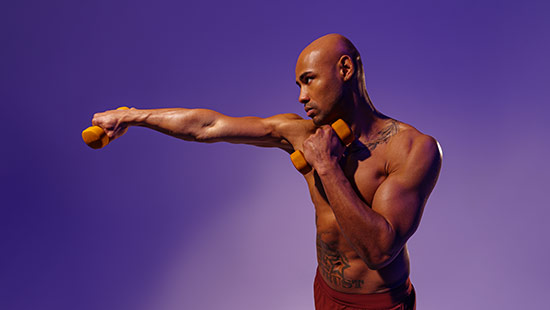
What Iron Body Training Actually Is
Iron body training — Tie Bai Gong in Chinese, literally "iron shirt skill" — is a category of conditioning practice within the Shaolin martial arts tradition aimed at developing structural resilience: the capacity to deliver and absorb significant force without sustaining damage. The Shaolin system is said to contain 72 distinct training methods, divided into 36 external and 36 internal practices. Iron body work spans both categories, and serious practitioners understand that external conditioning without the internal development to support it is both incomplete and potentially harmful.
The external practices are the ones most visible from outside the tradition — the progressive impact training applied to the shins, forearms, hands, ribs and other areas. The internal practices are less visible but equally important: the qigong work, the breath training, the cultivation of internal energy and structural alignment that gives the external conditioning its foundation. As we explored in our article on breathwork and martial arts, the breath is not incidental to this kind of training — it is central to both the conditioning process and the recovery from it.
Within the broad category of iron body training, several specific practices are most widely known. Iron palm — Tie Zhang — conditions the hands for striking. Iron forearm and iron shin work conditions the limbs for both striking and blocking. Iron shirt — sometimes called golden bell — conditions the torso and core for absorbing impact. Each area has its own progression, its own timeline and its own specific training methods, and each interacts with the others in a practitioner who trains them together over years.
The Physiological Logic
The effectiveness of iron body training, where it is effective, rests on principles that modern sports science understands well even if it arrived at them through a different route. The key mechanism is Wolff's Law — the established principle that bone tissue responds to mechanical loading by remodelling itself to become denser and stronger. When controlled stress is applied to bone repeatedly and progressively, the body responds by increasing osteoblast activity — the cellular process that deposits new bone material — in the loaded areas. The result, over months and years, is measurably greater bone density in the conditioned tissue.
The same adaptive process applies to connective tissue — tendons, ligaments and the fascial sheaths that surround muscle groups. These structures respond to progressive stress by increasing their collagen density and tensile strength, though they do so more slowly than muscle and require longer recovery windows between training sessions. This is one of the reasons the traditional timeline for iron body training is measured in years: the connective tissue adaptation that underpins safe high-level conditioning simply cannot be rushed without injury.
Neural adaptation is the third component. Repeated controlled impact progressively desensitises the nerve endings in the conditioned tissue — not by damaging them, but by raising their threshold of response through a process similar to the habituation that occurs with any repeated stimulus. This is why experienced iron body practitioners can absorb impacts that would be acutely painful to an unconditioned person: the tissue has been trained, at a neural level, to respond differently.
What is remarkable about the Shaolin tradition is not that these mechanisms work — modern exercise science would predict that they would — but that practitioners developed a sophisticated and safe training methodology to exploit them centuries before any of the underlying biology was understood. The progression protocols, the recovery practices, and the integration of breath and internal cultivation that the tradition insists upon are not mysticism. They are applied physiology, arrived at through observation and accumulated experience over generations.
The Progression Principle
If there is a single idea that separates effective iron body training from dangerous iron body training, it is the progression principle. The tradition is unambiguous about this: you begin with the lightest possible stimulus and you increase it only when the body has fully adapted to the current level. There are no shortcuts, no ways to accelerate the timeline without paying for it in injury and long-term damage. The monks who developed this tradition understood this from hard experience, and the records of what happens when it is ignored are not encouraging.
A traditional iron leg progression illustrates the principle clearly. The first stage involves nothing more than slapping the shins with the practitioner's own hands — light, rhythmic, consistent. This is performed daily for months, not weeks. The point is not to cause pain or damage. It is to begin the adaptive stimulus at a level the tissue can respond to without being overwhelmed by it. The second stage introduces a canvas bag filled with mung beans. Months more. Then gravel. Then, eventually, material that would have been unthinkable at the beginning of the process. Each stage is a response to genuine adaptation at the previous one, not an arbitrary progression on a fixed schedule.
This is exactly the principle of progressive overload that underpins modern strength training — the same principle that makes the difference between a training stimulus that produces adaptation and one that produces injury. The Shaolin tradition arrived at it independently and applied it with a patience and consistency that most modern training cultures would struggle to match.
The mental dimension of this process is inseparable from the physical one. The discipline tradition across all serious martial arts recognises that the capacity to do difficult things slowly and patiently — to sit with a long process without demanding immediate results — is itself a form of training. The iron body practitioner who rushes the progression is not failing at conditioning. They are failing at the deeper practice that conditioning is meant to develop.
Dit Da Jow — The Liniment Tradition
No account of iron body training is complete without discussing Dit Da Jow — Cantonese for "hit fall wine" — the herbal liniment that has been inseparable from martial conditioning in the Chinese tradition for centuries. It is one of the most practically important aspects of the practice and one of the least understood by those approaching it from outside.
Dit Da Jow is prepared by macerating a specific blend of herbs — roots, barks, resins and flowers — in high-proof alcohol or, in some lineages, vinegar, and aging the preparation for months or years before use. The formulas vary significantly between lineages and masters, and the recipe used by a school is typically closely guarded. Applied topically before and after conditioning work, it serves multiple purposes within traditional Chinese medicine: promoting circulation, dispersing blood stasis — the pooling that follows impact — reducing inflammation, and supporting the recovery of stressed tissue.
In TCM terms, the liniment works by moving qi and blood through the conditioned area, preventing the stagnation that would otherwise slow healing and, over time, accumulate as chronic damage. In more familiar terms, the herbs it contains — many of which have been shown to have anti-inflammatory, analgesic and circulatory properties — are delivering genuine therapeutic effects to tissue that is undergoing repeated controlled stress. The tradition's insistence on applying Dit Da Jow as part of every conditioning session is not ceremonial. It is the recovery protocol that makes the training sustainable over years and decades.
It is worth noting the distinction between Dit Da Jow and the liniments used in some modern combat sports contexts. Camphor-based warming oils, while useful for muscle preparation, do not penetrate bone or provide the same recovery support as a properly formulated Dit Da Jow. The tradition is specific about this, and practitioners who substitute one for the other are removing a component of the system that exists for reasons.
What Serious Schools Actually Do
Outside of Shaolin monasteries and a small number of dedicated traditional schools, iron body training in its full form is rarely taught. What most martial artists encounter is a version of the external conditioning — some shin conditioning, forearm work, maybe basic iron palm training — without the internal curriculum, the recovery protocols or the proper progression framework that the complete tradition provides.
This is not necessarily a problem. Moderate shin and forearm conditioning, practised progressively with adequate recovery, is a legitimate and useful element of training for striking arts. It develops real resilience, reduces injury in contact training, and builds a relationship with controlled discomfort that has genuine mental benefits — the same kind of graduated exposure to manageable stress that builds composure under pressure in other contexts.
What serious schools do differently is treat conditioning as a complete system rather than a collection of isolated techniques. They integrate the breath work — the coordination of exhale with impact, the use of abdominal tension to distribute force through the structure — that makes external conditioning safe and effective. They apply Dit Da Jow or equivalent recovery protocols consistently. They monitor progression carefully and do not allow students to advance faster than their tissue can adapt. And they place the physical conditioning within the broader context of the art's internal development, rather than pursuing it as an end in itself.
The Risks of Getting It Wrong
The tradition is direct about what happens when iron body training is approached incorrectly, and it is worth being equally direct here. Premature progression — training harder than the tissue has adapted to — does not produce faster results. It produces micro-damage that accumulates rather than heals, chronic inflammation in the conditioned areas, and, over time, the kind of joint and tissue damage that shortens careers and creates long-term health problems.
Iron palm training done incorrectly is particularly unforgiving in this respect. The hands contain some of the most complex structures in the body — small bones, intricate joint surfaces, dense networks of nerves and tendons — and damage accumulated through premature or excessive conditioning does not always announce itself immediately. Practitioners who skip the foundational stages and go directly to heavy bag striking or weighted impact work may not feel the consequences for years, by which time the damage is established and difficult to reverse.
The tradition's answer to this is not to avoid the training but to take it seriously enough to do it properly. Find a qualified teacher who has themselves trained in a lineage with an unbroken transmission of the complete methodology. Begin at the beginning, regardless of your existing level of fitness or martial arts experience. Apply the recovery protocols without exception. And accept that the timeline of years is not a cultural convention — it is the time the body requires to adapt safely to what the training demands of it.
Frequently Asked Questions
Iron body training — known in Chinese as Tie Bai Gong — is a systematic conditioning practice developed within the Shaolin martial arts tradition. It involves progressive impact training applied to specific areas of the body, coordinated with breath and internal cultivation, with the aim of developing structural resilience — the ability to both deliver and absorb force without injury. The Shaolin system includes 72 distinct conditioning methods categorised as internal and external.
Yes, when practised correctly and progressively. The physiological mechanisms are well understood — repeated controlled impact stimulates bone remodelling through osteoblast activity, increases connective tissue density, and desensitises nerves over time. These are the same adaptive processes exploited by modern strength and conditioning programmes. What makes iron body training effective or dangerous is entirely a function of whether the progression principle is followed.
Dit Da Jow — Cantonese for "hit fall wine" — is a traditional Chinese herbal liniment used throughout iron body training and martial conditioning more broadly. It is prepared by macerating specific herbs in alcohol or vinegar and aging the preparation for months. Applied topically before and after conditioning work, it is used to promote circulation, disperse bruising, reduce inflammation and support the recovery of stressed tissue. Recipes vary significantly between lineages and masters.
Traditional Shaolin iron body training is measured in years, not weeks. The foundational stages of a single area — iron leg training, for example — involve months of the lightest impact work before any progression. Full development of the practice across multiple areas of the body is the work of a decade or more of consistent daily training. Shortcuts compress this timeline at the cost of injury and long-term damage.
It can be, and the tradition is unambiguous about this. The dangers come almost entirely from inadequate progression — training too hard too soon, skipping foundational stages, practising without qualified instruction, or neglecting recovery protocols including Dit Da Jow application. Practised as the tradition intends — with patient progressive overload, proper recovery and qualified guidance — the risks are comparable to any serious physical training.
Related Articles
Psychological Self-Defence — The Mental Side of Personal Protection
The most dangerous moment in any confrontation is the one before it becomes physical. Awareness, ego management and the decision to walk away are the foundations trained practitioners build first.
Read Article
The Samurai Code — What Bushido Really Was and Why It Still Matters
The real story of bushido is stranger, more contested and considerably more interesting than the version that appears on gym walls and in martial arts manifestos.
Read Article