Of all the forms of exercise available to older adults, tai chi has one of the strongest and most consistent bodies of research behind it. It is low-impact, requires no equipment, can be adapted for almost any level of mobility, and produces measurable improvements in the areas that matter most as we age — balance, joint health, cardiovascular function and mental wellbeing. And unlike many forms of exercise that feel like something you are doing to your body, tai chi tends to feel like something you are doing for it.
Why Tai Chi Works So Well for Older Adults
The reason tai chi has been studied so extensively for older populations is straightforward — the demands it makes on the body match the areas where age-related decline tends to show up first. Balance, proprioception (your body's sense of where it is in space), leg strength, coordination and breath control all deteriorate gradually over time. Tai chi addresses all of them simultaneously, and it does so through movement that is gentle enough to be performed without aggravating existing joint conditions or placing stress on the cardiovascular system.
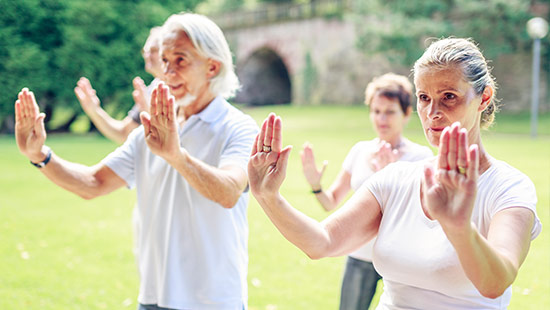
The movements are performed slowly and continuously, with the body weight shifting gradually between the legs, the spine held upright and the arms moving in curved, unhurried arcs. This constant, controlled shifting of weight is the core mechanism behind many of tai chi's balance benefits — the body is being trained, repeatedly and gently, to manage its own centre of gravity across a range of positions. Over weeks and months, this produces real and measurable changes in how steadily a person can move through the world.
There is also a mental dimension that is not incidental. Tai chi requires attention. You cannot drift through the practice — each movement has a direction, a quality, a transition into the next one. This sustained, gentle focus has its own benefits for cognitive health and stress, which we will come to shortly.
What the Research Actually Shows
The evidence base for tai chi in older adults is substantial, and it is worth being specific about what it covers rather than speaking in generalities.
Fall prevention is the area with the strongest and most consistent evidence. A 2023 systematic review and meta-analysis published in Frontiers in Public Health, which analysed 24 randomised controlled trials, found that tai chi significantly reduces both the risk of falls and the number of falls in older adults. A separate randomised clinical trial involving 670 adults aged 70 and over found that a tailored tai chi programme reduced falls by 58% compared to a stretching control group. A study specifically focused on adults aged 70 to 92 — physically inactive community-dwelling adults — found that three sessions per week over six months produced significant improvements in functional balance, physical performance, and fear of falling. These are not small effects, and they are consistently replicated across different populations and settings.
Joint health and osteoarthritis is another well-supported area. Research has found tai chi to be as effective as physical therapy for managing the physical symptoms of knee osteoarthritis, with additional benefits for depressive symptoms that physical therapy alone does not provide. For older adults managing chronic joint pain, this makes tai chi one of the more versatile options available — it addresses both the physical and psychological dimensions of living with a painful condition.
Blood pressure and cardiovascular health show more modest but meaningful benefits. Regular tai chi practice is associated with reductions in both systolic and diastolic blood pressure in older adults with hypertension. A broad scoping review of 27 meta-analyses found moderate to high quality evidence for improvements in cardiorespiratory fitness alongside the balance and fall prevention findings.
Mental health and sleep are increasingly well-supported areas. The same scoping review found evidence for improvements in anxiety, depression, sleep quality and overall quality of life in older adults who practise regularly. The quality of life improvements were significant across both physical and psychological dimensions in a meta-analysis of ten randomised controlled trials covering 1,170 participants.
The Easiest Movements to Begin With
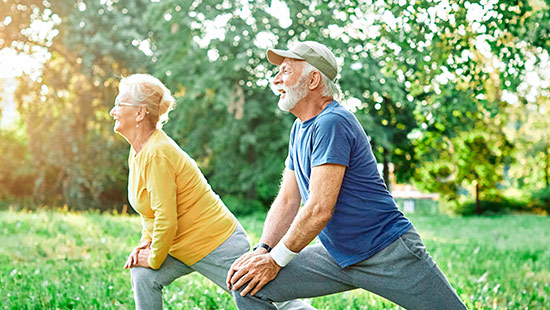
One of the things that puts people off tai chi when they see it performed by experienced practitioners is how fluid and seamless the movement looks. It can seem impossibly coordinated. The reality of learning it is much more forgiving than the finished product suggests — beginners start with individual movements in isolation, and the coordination comes gradually through repetition.
The following are among the gentlest and most accessible movements in the tai chi repertoire, and they are often taught in the first few weeks of a beginner's course.
Wuji standing is the foundation of all tai chi practice and requires nothing more than standing still correctly. Feet shoulder-width apart, knees very slightly soft, spine upright, shoulders relaxed, hands resting at the sides or held lightly in front of the body. The instruction is simply to stand, breathe and become aware of where your weight is. It sounds easy and it is genuinely difficult to do well, but even five minutes of this daily produces noticeable improvements in posture and body awareness over time.
Wave hands like clouds is one of the most-taught introductory movements and is frequently used in therapeutic tai chi programmes. The arms move in slow, horizontal arcs across the body while the weight shifts gently from foot to foot. The movement is smooth, continuous and deeply soothing to perform. Because it involves no stepping and the weight shifts are gradual, it is accessible even for those with significant balance difficulties.
Brush knee and push introduces the basic stepping pattern of tai chi — one foot steps forward, the weight transfers, and one hand brushes down while the other pushes forward. It is slightly more complex than the first two movements but teaches the fundamental principle of coordinating arm and leg movement, which underpins the entire art. Teachers will typically break it into its component parts and build it up slowly.
Parting the horse's mane is another foundational stepping movement that develops the alternating diagonal structure of the upper body. One arm rises while the other descends, the weight moves forward, and the body turns gently. It is one of the movements most immediately associated with the visual character of Yang style tai chi and is consistently cited by students as one of the first movements that begins to feel natural.
Closing form — the way a form ends — is worth mentioning because it teaches something important about how tai chi approaches the body. The hands lower slowly, the breath settles, the weight equalises. It is a deliberate decompression, not just an ending. Practising this alone — simply standing and breathing — is one of the simplest and most accessible entry points into the practice for anyone starting from scratch.
What to Look for in a Class
Not all tai chi classes are equally well-suited to older adults, and it is worth taking some time to find the right fit before committing to a course.
Look for a teacher who has specific experience working with older adults or with people returning from injury. They should be able to offer modifications for any movement that places too much demand on the knees, hips or lower back, and they should explain not just what to do but why. A good teacher will move around the room and offer individual guidance rather than simply demonstrating from the front.
Class size matters more than it might seem. A small group allows the teacher to notice when someone is struggling with a movement and offer help before the habit becomes ingrained. Large tai chi classes can be fine for experienced students but are less ideal for beginners, particularly those with mobility challenges.
Many classes in Ireland now offer specific beginner-friendly or seniors-focused sessions in the morning, which tend to attract a more supportive and unhurried environment. Community centres, Active Retirement Ireland groups and HSE health promotion programmes are all worth checking for local options. If you are managing a specific health condition, it is worth contacting the teacher before you attend to discuss whether the class is a suitable fit.
Starting at Home
While a class provides instruction and community that is difficult to replicate alone, there is real value in a short daily home practice alongside or between classes. Even ten minutes of standing, simple weight shifting and slow arm movements reinforces what is being learned in class and keeps the nervous system engaged with the material.
The single most valuable thing a beginner can do at home is practise the standing work — Wuji standing, as described above. It requires no instruction beyond what a teacher can convey in a few minutes, it is safe to perform independently, and its benefits for posture, body awareness and breath accumulate steadily over time. Most experienced practitioners, when asked what they would recommend to a complete beginner with no access to a class, point to this first.
Frequently Asked Questions
Yes. Tai chi is one of the most extensively researched forms of exercise for older adults. Strong evidence supports its benefits for balance, fall prevention, blood pressure, joint health and mental wellbeing. It is low-impact, requires no equipment and can be adapted for a wide range of mobility levels.
Absolutely. Many people begin tai chi in their seventies, eighties and beyond. The practice places minimal stress on the joints, can be performed seated if necessary, and does not require any prior fitness. A randomised controlled trial specifically studying adults aged 70 to 92 found significant improvements in balance and a meaningful reduction in falls after six months of regular practice.
Most studies showing significant health benefits used a frequency of two to three sessions per week, each lasting between 30 and 60 minutes. Even one session per week combined with short daily practice at home produces measurable improvements over time.
Yang style and Sun style are both well-suited to older adults. Yang style is the most widely available and uses slow, expansive movements that are easy to follow. Sun style incorporates lively stepping patterns and an upright posture that has been specifically studied for fall prevention. Wu style, with its smaller frame and compact movements, is particularly good for those with limited mobility.
Tai chi classes for older adults are available through community centres, leisure centres, Active Retirement Ireland groups, and dedicated martial arts schools throughout Ireland. Many classes run in the morning specifically for older adults. Searching through your local HSE health promotion office or Active Ireland resources can help identify classes near you.
Related Articles
What Is Tai Chi — A Beginner's Guide to the Art and Its Benefits
Tai chi is not gentle gymnastics. It is a complete discipline — martial in origin, meditative in method, and deeply practical in its effects on body and mind.
Read Article
Qigong vs Tai Chi — What Is the Difference and Which Is Right for You
Both are ancient Chinese practices rooted in breath, movement and internal energy. But they are distinct disciplines. Here is how to tell them apart.
Read Article