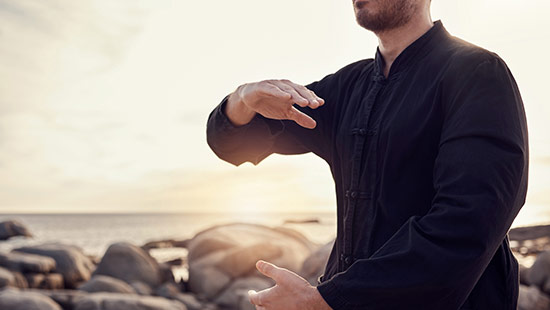
Stand at the edge of a park on a quiet morning and watch a group practising either of these disciplines and you may find it genuinely difficult to say which one you are looking at. The slow movements, the upright posture, the quality of attention — from a distance, qigong and tai chi are almost indistinguishable. Ask the practitioners and most will tell you they are completely different things. Both answers are correct, and understanding why is the key to knowing which one belongs in your life.
The Confusion Is Understandable
Qigong and tai chi share the same theoretical roots. Both draw on the ancient Chinese understanding of qi — the vital energy understood to circulate through the body along pathways called meridians — and both use slow, deliberate movement and controlled breath to cultivate and direct that energy. Both are classified within traditional Chinese medicine as forms of neigong, or internal cultivation. Both have been practised in China for centuries and both have been adopted worldwide as health and wellness practices.
Many tai chi teachers incorporate qigong exercises into their classes. Many qigong practitioners study elements of tai chi. The two traditions have influenced each other continuously, and some of the most accomplished practitioners of each discipline have been deeply immersed in both. Given all of this, the confusion between them is entirely understandable.
But they are distinct, and the distinction matters — particularly when you are trying to decide where to begin or how to deepen an existing practice.
What Qigong Actually Is
Qigong — pronounced roughly "chee-gong" — means something like "energy cultivation" or "working with life energy." It is not a single practice but a vast category encompassing thousands of different forms, developed across different traditions, time periods, therapeutic contexts and spiritual lineages. Some forms of qigong are medical, designed to address specific health conditions. Some are spiritual, rooted in Taoist or Buddhist practice. Some are martial, used to develop internal power. Some are purely for general health and longevity.
What all qigong forms share is a set of core principles: deliberate movement or stillness coordinated with breath, focused intention, and the aim of cultivating the smooth and abundant flow of qi through the body. The movements themselves range from extremely simple — standing still and breathing, or raising and lowering the arms in a slow arc — to elaborate sequences of dozens of postures. The variety is one of qigong's greatest strengths. Whatever a person's age, physical condition or available time, there is a form of qigong accessible to them.
Qigong is older than tai chi by a considerable margin. Practices recognisable as qigong appear in Chinese records dating back more than two thousand years, and the theoretical framework underlying them — the meridian system, the concept of qi, the cultivation of jing, qi and shen — predates any specific codified practice by centuries more. Tai chi, by contrast, has a traceable history of around four hundred years and was developed within a specific martial arts lineage.
What Tai Chi Actually Is
As we explored in our guide to what tai chi is, tai chi chuan is at its core a martial art. It was developed as a fighting system, it contains a sophisticated set of combat applications embedded within its forms, and its foundational principles — yielding rather than meeting force, using an opponent's energy against them, developing root and structure — are martial principles first and health principles second.
This is not just historical background. It is the thing that gives tai chi its particular character as a practice and distinguishes it from qigong at a structural level. The forms of tai chi are long, choreographed sequences of movement with precise transitions, weight distributions, hand positions and directional changes. Every posture has a name, an application and an internal instruction. Learning a tai chi form is a substantial undertaking — most beginners spend months on the first section of a form before it begins to feel natural, and traditional long forms can take years to learn properly.
The health benefits of tai chi are real and well-evidenced, as we discussed in the context of tai chi for seniors. But they are, in a sense, a byproduct of a system designed for something else. The balance improvements come from the constant shifting of weight that combat training demands. The breath regulation comes from the internal cultivation that gives a martial arts practitioner access to their full power under pressure. The stress reduction comes from the same meditative quality that allows a fighter to remain calm in a dangerous situation. These are not incidental — they are deeply embedded in the structure of the practice — but they were not the original purpose.
Where They Overlap
The overlap between qigong and tai chi is substantial enough that many experienced teachers treat the boundary between them as permeable rather than fixed. Tai chi contains qigong — the standing practices, the breathing exercises and the internal cultivation work that serious tai chi students do are forms of qigong. And qigong, at its higher levels, shares the internal principles of tai chi in terms of structure, root and the relationship between breath and movement.
Both practices develop awareness of the dan tian — the energy centre located just below the navel — as the source of movement and breath. Both emphasise the coordination of upper and lower body through a relaxed, upright spine. Both use the breath to regulate the nervous system in the way described in our article on breathwork and martial arts — the activation of the parasympathetic state through slow, nasal, diaphragmatic breathing is a core mechanism in both traditions.
Research broadly supports treating them as equivalent in terms of health outcomes. A comprehensive review published in the American Journal of Health Promotion, which examined 77 randomised controlled trials of both practices, found consistent evidence for similar benefits across bone health, cardiopulmonary fitness, balance and fall prevention, quality of life and self-efficacy. A more recent evidence map covering systematic reviews from 2014 to 2024 found high certainty of benefit for both practices in hypertension and osteoporosis, and moderate certainty of benefit across conditions including chronic low back pain, diabetes, depression, falls and knee osteoarthritis.
The Honest Comparison
Accessibility and learning curve. Qigong is generally easier to begin. Individual qigong exercises are shorter, simpler and more immediately learnable than a tai chi form. A beginner can learn a basic qigong set — the Eight Brocades, or Ba Duan Jin, is the most widely taught and consists of eight standing exercises — in a few sessions and begin practising independently within weeks. Learning a tai chi form to a standard where it can be practised meaningfully takes considerably longer, and the complexity of the transitions and weight shifts means that unsupervised practice early on can ingrain errors that take time to correct.
Physical demand. Both practices are low-impact, but tai chi places more sustained demand on the legs than most forms of qigong. The wide stances and continuous weight shifting of tai chi develop real strength in the quadriceps and hip stabilisers over time, which is part of why the balance and fall prevention research is so strong. For someone who is deconditioned or managing joint pain, some tai chi movements may need modification. Most qigong exercises are performed in a more neutral stance and are less demanding in this respect, though they can be progressively deepened as strength develops.
Depth and longevity. Tai chi, for many practitioners, becomes more rewarding the longer it is studied. The layers of the practice — the form, the applications, the push hands, the internal cultivation — continue to reveal themselves over years and decades in a way that keeps experienced practitioners genuinely engaged. Qigong is deep in its own right, particularly in its more advanced forms, but the entry-level practices are more readily exhausted. Many long-term qigong practitioners eventually find their way to tai chi as a complement or extension of what they have built.
What each asks of you. Qigong asks for regularity and presence. Twenty minutes of focused qigong practice daily produces consistent, measurable benefits over time. It does not ask for a large time commitment, a particular level of fitness or a long learning process. Tai chi asks for patience, consistent attendance in class over months and years, and a willingness to sit with complexity and uncertainty while the form gradually becomes natural. The rewards are proportional to the investment in both cases.
How to Choose
The most useful question is not which practice is better — the research suggests they are broadly equivalent in terms of health outcomes — but which one suits who you are and where you are right now.
If you are looking for something you can begin immediately and practise independently within a short time, that is gentle enough for any level of fitness and mobility, and that will produce steady health benefits without a large time investment — qigong is the right starting point. It will serve you well as a standalone practice and will give you a foundation of internal awareness that makes tai chi easier to learn when and if you come to it.
If you are drawn to the history and depth of a complete system, interested in the martial dimension even if you never intend to use it, willing to invest the time required to learn something properly and looking for a practice that will continue to develop for the rest of your life — tai chi is the right choice. It is a more demanding starting point but a richer long-term destination.
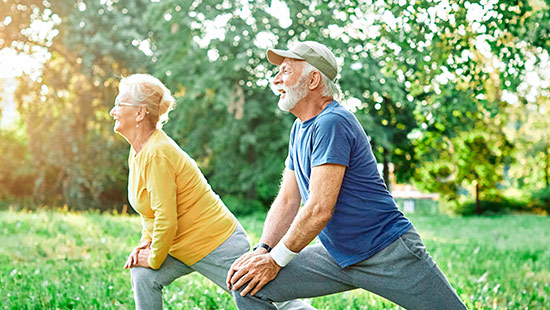
If you are an older adult primarily interested in the balance and fall prevention benefits, both practices deliver them effectively, as the evidence makes clear. Yang style tai chi and Sun style tai chi have both been specifically studied in this context with strong results. If the complexity of tai chi feels daunting, qigong — particularly the Eight Brocades or a standing post practice — is an excellent and well-evidenced alternative that will produce the same core benefits.
Can You Do Both
Yes, and many practitioners do. The two practices are not in competition — they are complementary, and the internal skills developed in each transfer directly to the other. Qigong deepens the breath awareness and internal sensitivity that makes tai chi more alive. Tai chi gives qigong practitioners a richer structural framework and the challenge of complexity that keeps the mind engaged over the long term.
A common and effective approach is to use qigong as a warm-up and cool-down for tai chi practice — the Eight Brocades or a short standing post practice before class settles the mind, warms the body and activates the internal awareness that makes the tai chi form more productive. Many teachers in Ireland structure their classes this way, and it is an approach that beginners can adopt from the first session.
Whichever you choose, or whether you eventually choose both, the important thing is to begin. The benefits of these practices are not theoretical — they are produced by practice, over time, in the body. The best one to start with is the one you will actually do.
Frequently Asked Questions
Qigong is a broad category of Chinese health and energy cultivation practices that predates tai chi by thousands of years. Tai chi is a specific martial art that contains qigong principles as part of its internal training. Qigong has no combat lineage or martial application. Tai chi does, and its structure reflects that origin even when practised purely for health. Both produce similar health benefits, but they ask different things of the practitioner in terms of learning and commitment.
Generally yes, at least initially. Qigong exercises tend to be simpler in structure, with fewer movements to learn and less precise coordination required. Many qigong forms involve repetitive, standalone movements rather than the long choreographed sequences of tai chi. This makes qigong more immediately accessible for beginners or those with limited mobility, though tai chi becomes more rewarding over time as the form develops.
Research suggests the health benefits of both practices are broadly similar and in many cases equivalent. A comprehensive review published in the American Journal of Health Promotion found consistent evidence across randomised controlled trials for improvements in bone health, cardiopulmonary fitness, balance and fall prevention, quality of life and self-efficacy from both qigong and tai chi. The two practices share the same theoretical roots and operate through similar physiological mechanisms.
Yes, and many practitioners do. Qigong and tai chi complement each other well — qigong develops the internal awareness and breath regulation that deepens tai chi practice, while the structural discipline of tai chi gives qigong practitioners a more precise physical framework. Many tai chi teachers incorporate qigong warm-up exercises into their classes, and dedicated qigong practice can significantly accelerate progress in tai chi.
Both are well-suited to older adults, and the research supports similar outcomes for balance, fall prevention and overall wellbeing from each practice. Qigong may be the easier entry point for those with significant mobility limitations, as individual exercises can be performed seated and the learning curve is gentler. Tai chi, once learned, offers a richer and more varied practice that many older adults find sustaining over the long term.
Related Articles
What Is Tai Chi — A Beginner's Guide to the Art and Its Benefits
Tai chi is not gentle gymnastics. It is a complete discipline — martial in origin, meditative in method, and deeply practical in its effects on body and mind.
Read Article
Breathwork and Martial Arts — How Breathing Shapes Performance and Resilience
Breath is the bridge between the physical and mental sides of martial arts training. How you breathe under pressure determines how well you think, how efficiently you move, and how quickly you recover.
Read Article