A lot of people who end up in serious trouble did not stumble into it blindly. They walked into it — step by step, decision by decision — because pride, adrenaline or a failure of awareness closed down their options before they realised what was happening. The physical side of self-defence is rarely the deciding factor. The mental side almost always is.
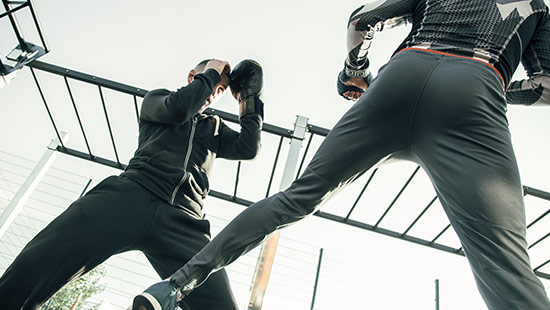
The Gap Between What You Think You'd Do and What You Actually Do
Ask most reasonable people how they would handle a threatening situation and they will describe a version of themselves that is calm, measured and in control. They would walk away. They would not rise to it. And yet if you ask a different cross-section — people being honest rather than considered — a surprisingly large number will tell you their first instinct would be to confront, to square up, to not let it go. Neither answer is wrong exactly, but both reveal something: how we think we will behave and how we actually behave under pressure are often very different things.
Then adrenaline hits, someone says the wrong thing in the wrong tone, and all of that dissolves. The calm, rational person they described is nowhere to be found. In their place is someone making decisions based entirely on how they feel in that moment — which is exactly the worst possible basis for decision-making when the stakes are high.
This is not a character flaw. It is just how people work under pressure. When something feels threatening — and a threat to how others see you can hit just as hard as a physical one — the thinking part of your brain effectively steps aside. You stop calculating consequences and start reacting. The anger feels clarifying in the moment, almost like focus, but it is the opposite of focus. It is the point at which most bad decisions get made. Knowing this about yourself does not make you immune to it, but it does mean you can prepare for it rather than being blindsided by it when it matters.
The Pride Trap
The single biggest factor in avoidable violence is pride. Not aggression, not alcohol, not circumstance — pride. The moment a person feels publicly disrespected, something shifts. The situation stops being about physical safety and starts being about social standing. Walking away stops feeling like the sensible option and starts feeling like losing.
Anyone who has worked in bars, nightclubs or any environment where confrontation is a regular occurrence will recognise this immediately. Two people who have no particular interest in fighting will escalate a situation to the point of violence because neither of them is willing to be seen to back down. The audience — real or imagined — becomes more important than the outcome. People get seriously hurt over nothing, not because they wanted to fight, but because they could not find a way to stop that did not feel like defeat.
The reframe that experienced practitioners and door staff arrive at, usually after witnessing enough of these situations, is straightforward: walking away is not losing. It is the correct decision, and it is the one that every person with genuine experience of violence will tell you is right. The people most capable of handling a confrontation physically are almost always the ones most committed to avoiding one. That is not a coincidence.
Leaving a Position of Safety — The Decision with No Good Outcomes
One of the most predictable and most avoidable patterns in serious confrontations is the decision to leave a position of safety. You are in your car. You are inside your home. You are behind a door, a counter, a barrier of some kind. The aggressor is outside that boundary. And something — anger, pride, the feeling that you cannot let this stand — compels you to step outside it.
This is the decision that changes everything, and it almost never changes it for the better.
Consider what actually happens when you leave your locked car to confront someone who has wronged you in traffic. There are two realistic outcomes, and both of them are bad. The first is that the other person is more willing to be violent than you anticipated, and you are injured — possibly seriously — in a situation you chose to enter. The second is that you are more capable than they are, the confrontation becomes physical, and you hurt them.
That second outcome feels like the better one in the moment. It is not. The moment you stepped out of that car, you made a choice to close the physical distance between yourself and another person in an already hostile situation. Depending on what followed, a solicitor, a garda or a judge may later describe that choice as aggression. The fact that the other person behaved badly first is relevant, but it is not automatically a defence. You had a position of safety. You left it voluntarily. That matters, legally and practically, and it matters in ways that can follow you for years.
An assault charge, a civil claim, a conviction that affects your employment — none of these were part of the calculation when you opened the car door. They rarely are. The person who steps outside has usually thought no further than the next thirty seconds. The law thinks considerably further than that.
The principle extends beyond vehicles. Leaving your home to confront someone on your doorstep, stepping outside a venue to continue an argument that started inside, following someone rather than letting them leave — each of these decisions shifts the legal and physical geometry of the situation in ways that are difficult to undo. Contain, don't confront. That is the rule, and it exists because it works.
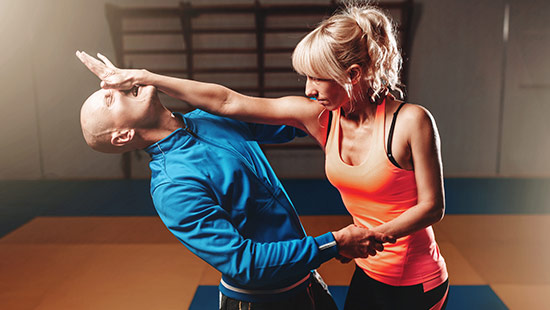
Getting Involved in Someone Else's Situation
The impulse to intervene when someone appears to be in danger is not a bad instinct. In many situations it is the right one. But it requires a clear head and an accurate read of what is actually happening — and in the heat of the moment, both of those are harder to come by than most people assume.
Domestic disputes are the clearest example of a situation where well-intentioned intervention regularly goes wrong. What looks from the outside like one person threatening another is frequently a relationship dynamic that neither party wants a stranger to enter. The person who steps in to help — shouting, grabbing, physically separating — can find within seconds that both parties have turned on them. The rescuer becomes the aggressor in the eyes of everyone present, including the people they were trying to protect.
This is not an argument for passivity. It is an argument for reading situations before acting on them. If you are going to involve yourself, do it from distance — verbally, calmly, in a way that does not commit you physically before you understand what you are dealing with. Use the presence of staff, security or other people. Call for help rather than becoming the help. Keep yourself mobile and keep an exit available.
The same principle applies to arguments between strangers, altercations outside venues, and any situation where the full history of what is happening is not visible to you. Partial information leads to partial decisions. Partial decisions in volatile situations lead to outcomes nobody planned for.
Situational Awareness — What It Actually Looks Like
Situational awareness is one of those phrases that gets used so often it has started to feel abstract. It is not abstract. It is a specific, learnable habit of observation that takes almost no time to practise and significantly changes the quality of the information you have available when you need it.
In practical terms it looks like this: when you enter any new environment — a bar, a restaurant, a sports venue, a car park — you take thirty seconds to orient yourself. Where are the exits? Not just the main door you came in through, but the fire escapes, the staff doors, the side exits. Where are the staff? Where are the natural bottlenecks — the areas where movement would be restricted if something went wrong? Where are you in relation to all of this?
This is not paranoia. It is the same low-level habit that experienced security staff, military personnel and martial artists develop over time, and it costs nothing to adopt. Most of the time you will never need the information. On the rare occasion that you do, you will already have it — and having it in advance is the difference between a calm exit and a panicked one.
Beyond physical layout, awareness extends to people. Not surveillance or suspicion, but basic attentiveness. Who is agitated? Where is the tension in a room? Is a situation developing somewhere that you should move away from rather than towards? These are questions that take a fraction of a second to ask and can completely change your options before anything has actually happened.
Training as a Tool for Pressure-Testing the Mind
One of the less discussed benefits of consistent martial arts training is what it does to your relationship with stress and pressure. Sparring, scenario work and contact training all expose the nervous system to controlled versions of the adrenal response — the heart rate spike, the narrowing of attention, the physical intensity of a threatening situation. Experienced training partners and good coaches know how to create that pressure safely and repeatedly.
Over time, this changes something. Not by making you fearless — fear is useful and the absence of it is dangerous — but by making the stress response more familiar and therefore less overwhelming. Students who have trained seriously for a few years report, consistently, that they are calmer in tense situations outside the gym. Not because they know they can fight, but because they have learned to function while their nervous system is activated. That is a transferable skill, and it is available to anyone willing to put in the work.
The psychological curriculum of martial arts — the awareness, the ego management, the understanding of how violence actually unfolds — is not separate from the physical curriculum. In every tradition that takes the art seriously, it is the foundation of it. The physical techniques are built on top. That ordering is deliberate, and it is worth understanding whether you ever intend to use a technique or not.
Frequently Asked Questions
Psychological self-defence refers to the mental and behavioural skills that allow a person to recognise, avoid and de-escalate dangerous situations before they become physical. It includes situational awareness, emotional regulation under pressure, boundary-setting and understanding how pride and ego influence decision-making in conflict.
Irish law permits reasonable force in self-defence, but the definition of reasonable is determined after the fact by a court. Leaving a position of safety to confront someone, or using disproportionate force, can result in criminal charges regardless of who initiated the situation. The safest legal position is always to avoid or withdraw from confrontation where possible.
Under stress and perceived threat to social status, the brain's threat-response system activates in the same way it does during physical danger. Rational thinking narrows, emotional reactivity increases, and the instinct to defend ego overrides the ability to assess consequences. This is why otherwise intelligent people walk into situations they could easily have avoided.
A position of safety is any location or circumstance that provides physical or legal protection — your home, your locked car, a public space with staff and witnesses. Maintaining it means resisting the impulse to leave that protection to confront an aggressor. Once you leave it, you change the legal and physical dynamics of the situation, often to your disadvantage.
Yes. Serious martial arts training develops situational awareness as a byproduct of the practice. Sparring and scenario training expose students to stress responses in a controlled environment, which builds the ability to remain calm and observant under pressure. Many experienced practitioners report that their training made them less likely to end up in physical confrontations, not more.
Related Articles
Iron Body Training — The Shaolin Conditioning Tradition Explained
Iron body training is one of the most misunderstood practices in the martial arts world. This is what it actually involves and how serious practitioners approach it safely.
Read Article
The Samurai Code — What Bushido Means Today
Bushido is not a relic of feudal Japan. Its principles — discipline, restraint, responsibility — are as applicable to modern life as they were to the warriors who first articulated them.
Read Article